Deep sea sharks: viral 17-foot sixgill shark video is from 2019
APJ-RAISE team · · 6 min read
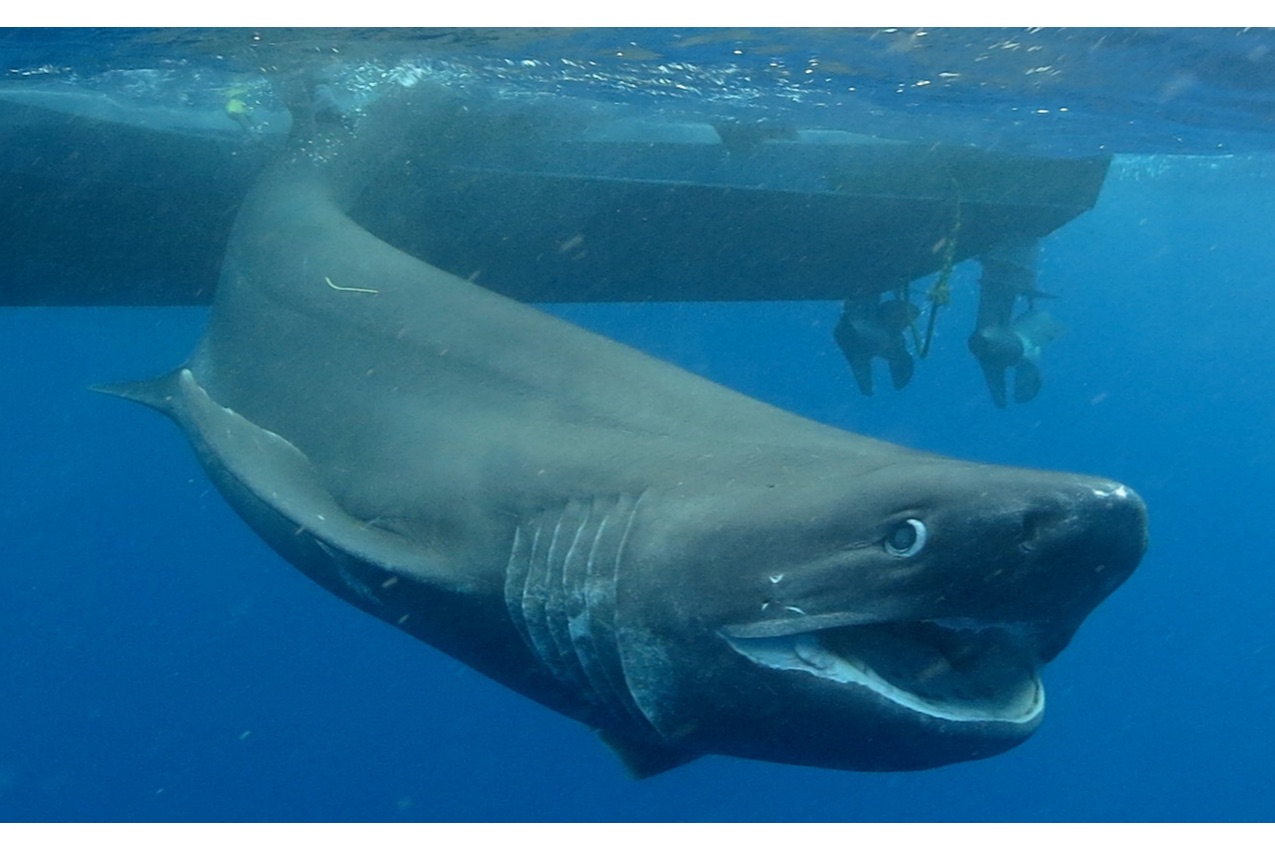
The deep-sea shark video going viral this weekend, a 16-foot sixgill shark pressing its snout against a submarine window, was filmed in June 2019. It is real and it is remarkable, but it is not new. The Florida Museum of Natural History reported the dive in July 2019, and Fox/OutKick, which helped the clip spread again on 22 November 2026, notes the 2019 date further down its own story.
The science behind the clip is the better story. That dive was about putting a satellite tag on a deep-sea shark without ever bringing it to the surface. And this month also brought real new deep-sea shark science, including a new species described by Indian scientists from fish landed in Kerala.
Where is the viral 17-foot shark video from?
On the night of 29 June 2019, a team in the three-person submersible Nadir dived to more than 1,700 feet (about 520 metres) in the Bahamas. Nadir was launched from OceanX's research ship Alucia. The Florida Museum names the people involved: Dean Grubbs of Florida State University led the expedition, Gavin Naylor of the Florida Museum placed the tag, and Brendan Talwar and Edd Brooks of the Cape Eleuthera Institute coordinated the work. Lee Frey piloted the sub.
A large female, estimated at about 16 feet, nosed against the window. That is the shot now on social media. The tag went on a different shark, a male that approached the sub. The Florida Museum called it a historic first that took three expeditions.
How scientists tagged a deep sea shark from a submarine
The usual way to tag a shark is to hook it and haul it up. For a deep-sea species that is a rough trip. A sixgill lives in cold, dark water hundreds of metres down. Pulling it up through warm surface water and bright light stresses it, and the data you collect afterwards may show a stressed animal, not normal behaviour.
Tagging at depth removes that problem. Per the Florida Museum, the tag recorded depth, light and temperature every few minutes for three months. Then it released, floated to the surface and sent its stored data by satellite. Researchers call this a pop-up satellite tag.
For a student, this is a clean example of a measurement problem: the act of measuring can change what you measure. Researchers in every field face a version of it, from psychology to machine learning benchmarks.
What is a sixgill shark, and how big does it get?
- Scientific name: Hexanchus griseus.
- Six gill slits on each side. Most sharks have five, which makes sixgills part of an old lineage.
- Size: females can grow very large. Reports of this clip put the female at 16 to 17 feet.
- Habitat: deep water worldwide, often hundreds of metres down, though some come shallower at night.
New deep sea shark species found in India: Echinorhinus roinee
The bigger news for Indian readers came on 11 November 2026. Scientists from the Zoological Survey of India (ZSI) and ICAR-Central Marine Fisheries Research Institute (CMFRI) described a new bramble shark, Echinorhinus roinee, according to IBG News. The paper is reported in Records of the Zoological Survey of India, with P. Rozario, K. K. Bineesh, S. Beura, K. V. Akhilesh, A. Kasinath and D. Banerjee as authors. We could not open the paper itself: its DOI returned an error on 23 November.
Per that report, the specimens came as bycatch from deep-sea shrimp trawlers landing at Sakthikulangara Fishing Harbour in Kollam, Kerala, from continental slopes about 350 to 450 metres deep. Bramble sharks were known from two species before this, Echinorhinus brucus and Echinorhinus cookei. DNA barcodes placed the Indian sharks in a separate Indian Ocean lineage, and the report notes differences in eye size, pelvic fins and head length.
Notice where the discovery happened: not on a research cruise, but at a fishing harbour. Much of India's deep-sea biodiversity work starts with scientists checking what trawlers bring in. It is cheap, and it finds species no research ship has filmed.
Giant false catshark found off Martinique for the first time
A paper in Ecology and Evolution, reported by BioScience on 20 November 2026, describes the first record of the false catshark (Pseudotriakis microdon) from the Lesser Antilles in the Caribbean. Per that report, an artisanal fisher caught a female about 310 cm long at 800 metres off Martinique in June 2025. Local fishers said they had seen more than ten similar sharks over about 20 years. We could not open the paper on Wiley to check the details.
That last detail is worth noticing. Fishers had known about these sharks for years before science recorded them. Local knowledge is often the first data, and good researchers treat it as a lead to check.
What the viral shark coverage got wrong
- The date. Many reposts present the video as new. It is from June 2019.
- The place. Fox says Exuma Sound; the Florida Museum's 2019 article says off Eleuthera. Both islands border Exuma Sound, so this may be a difference in wording, but the original source names Eleuthera.
- Which shark was tagged. The famous female in the clip was not the one tagged. The tag went on a male.
- The "17-foot" figure. The original source says 16 feet. Size estimates through a curved sub window are rough.
How do scientists study deep sea sharks?
- 1Submersibles and remote cameras, often with bait, to film behaviour where it happens.
- 2Satellite and acoustic tags, now sometimes attached at depth, to track depth and movement for months.
- 3Fishery landings and bycatch, where many new species are first noticed.
- 4DNA barcoding, comparing a short gene sequence with known species, to tell look-alike species apart.
- 5Museum collections, where type specimens are kept so later scientists can check the description.
If marine biology interests you, a student project does not need a submarine. Public DNA barcode databases and published fishery landing data are open to anyone. Our free course on research foundations shows how to turn a question like "which sharks are landed in Kerala?" into a study. For another case of a news story drifting from its source, see our post on the Black Saturn black hole. At APJ-RAISE, students work on real research questions together. Joining is free.
Questions people ask
- Is the viral sixgill shark video new?
- No. It was filmed on a submersible dive in the Bahamas in June 2019 and went viral again in November 2026.
- How big do sixgill sharks get?
- Bluntnose sixgills are among the largest deep-sea sharks. The female in the viral video was estimated at about 16 feet.
- What new shark species was found in India?
- Echinorhinus roinee, a bramble shark described by ZSI and CMFRI scientists from specimens landed at Sakthikulangara, Kollam, Kerala, reported in November 2026.
- How do scientists tag deep-sea sharks?
- Usually by catching them, but in 2019 a team tagged a sixgill from a submersible at about 520 metres, using a satellite tag that later pops up and sends its data.
Sources
- 1.Florida Museum of Natural History (15 Jul 2019). Scientists tag shark from submersible.
- 2.OceanX (YouTube). The Quest to Be The First to Tag a Shark from A Submarine.
- 3.Gavin Naylor on X (2 Jul 2019). Original post of the sixgill footage.
- 4.Fox News / OutKick (22 Nov 2026). Massive 17-foot shark comes face-to-face with scientists in incredible deep-sea footage.
- 5.IBG News (11 Nov 2026). Indian scientists discover new deep-sea shark species in the Indian Ocean: Echinorhinus roinee.
- 6.Rozario, P. et al. (2026). Echinorhinus roinee, a new species of bramble shark from the southwestern coast of India. Records of the Zoological Survey of India 126(1S). (DOI not resolving on 23 Nov 2026.)
- 7.BioScience (20 Nov 2026). First record of the false catshark Pseudotriakis microdon from Lesser Antilles.
- 8.Sanchez, T. et al. (2026). First Record of the False Catshark (Pseudotriakis microdon) From Lesser Antilles. Ecology and Evolution 16(11).