Riemann hypothesis solved? What the AI Lean proof really shows
APJ-RAISE team · · 8 min read
On 20 November 2026, Anthropic mathematician Levent Alpöge (often typed Levent Alpoge) posted a short note claiming a proof of the Riemann hypothesis, developed with Anthropic's AI model Claude and written as code for the Lean proof assistant. A day later, the Lean and Mathlib communities published a joint statement certifying both the formal statement and the proof as correct. Andrew Sutherland of MIT ran his own independent checks.
So is the Riemann hypothesis solved? The computer-checked answer, as of 23 November, is very likely yes. The human answer is not in yet: no readable paper has been published, no journal has reviewed it, and mathematicians say understanding the argument could take months or years. This post separates the two.
What is the Riemann hypothesis, in simple terms?
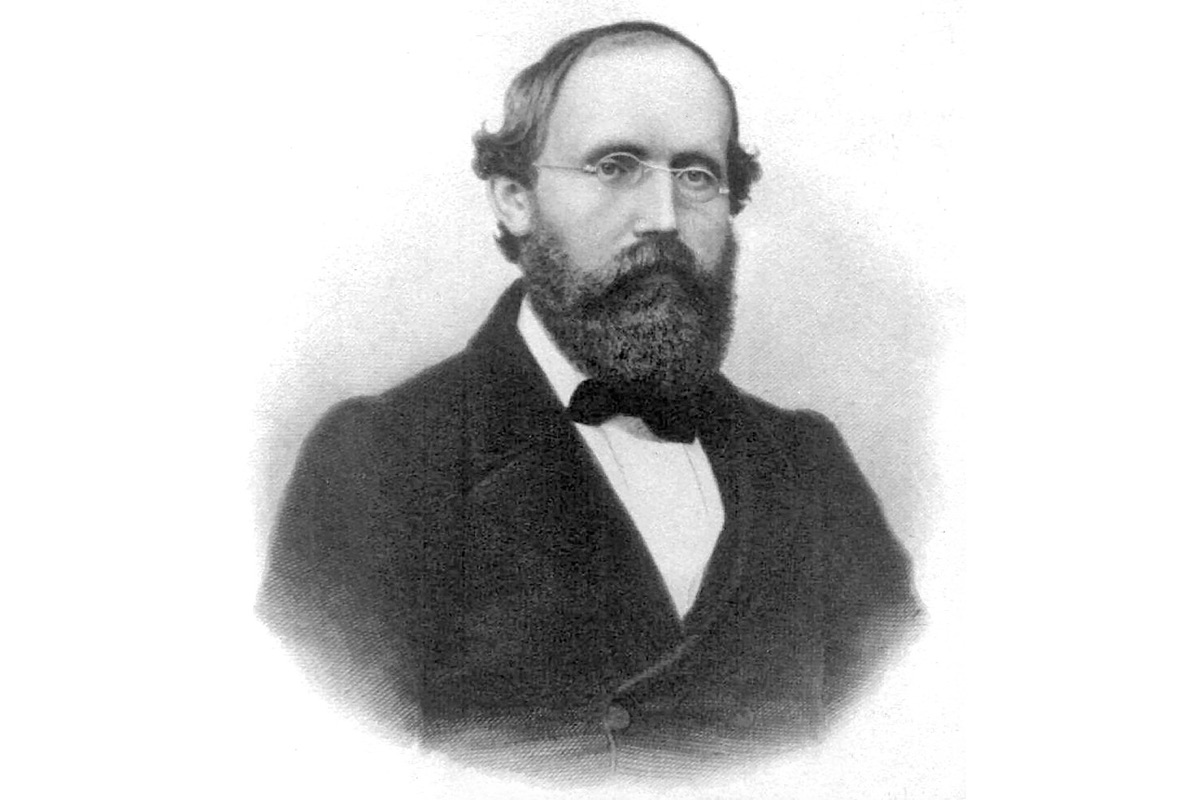
Bernhard Riemann stated it in 1859, which is why reports call it a 167-year-old problem. It is about the Riemann zeta function, ζ(s), which takes a complex number s and returns another. The function equals zero at the negative even numbers −2, −4, −6 and so on. Those are the trivial zeros. All the other zeros, the interesting ones, lie in a strip between real part 0 and real part 1.
The hypothesis says every one of those non-trivial zeros sits exactly on the line where the real part is 1/2. The first one is at 1/2 + 14.1347…i. Computers have checked trillions of them, and every one is on the line. But checking examples never proves a statement about infinitely many zeros.
Why anyone cares: the positions of these zeros control how evenly the prime numbers are spread out. If the hypothesis holds, the error in our best formula for counting primes is as small as it can be. Hundreds of published results begin with "assume the Riemann hypothesis". It is one of the Clay Mathematics Institute's seven Millennium Prize Problems.
What did Lean actually check?
Lean is a programming language for mathematics. You write definitions and proofs as code, and a small program called the kernel checks every logical step. If the kernel accepts the proof, the proof is correct, provided two things hold: the kernel itself has no bugs, and the formal statement really says what you think it says.
Here is what the independent checks covered, according to Sutherland's verification page, last updated 22 November:
- The whole library, 175,187 modules, compiles with Lean and Mathlib v4.33.1.
- The five headline theorems rely only on Lean's three standard axioms. There is no "sorry", Lean's placeholder for a missing step.
- Several independently written kernels replayed the proof and accepted it, which guards against a bug in any one kernel.
- An independent rebuild reproduced the exported proof byte for byte.
- The statement proved is Mathlib's existing definition of the Riemann hypothesis, written before this proof existed. That answers the "did they prove the right thing?" worry.
The Lean blog describes the whole library as about 17 million lines of code.
Does it also prove the generalized Riemann hypothesis (GRH)?
Partly. The generalized Riemann hypothesis, or GRH, makes the same claim for a wider family of functions called L-functions. The zeta function is the simplest member of that family. According to Sutherland's page, the Lean proof also covers GRH for Dirichlet L-functions, for every modulus and every character.
That part matters a lot in practice. GRH for Dirichlet L-functions controls how primes are shared out between arithmetic progressions, such as primes ending in 1, 3, 7 or 9. Many results in number theory and computer science were proved only "assuming GRH". One example: the Miller primality test runs in guaranteed polynomial time if GRH holds.
It does not cover every version of GRH. Dedekind zeta functions, Hecke L-functions and automorphic L-functions are outside what was proved, so some conditional results still stay conditional.
What is still not settled
- No human-readable proof. Reports say Claude also wrote a prose account running past 250,000 pages, which has not been published. Alpöge himself has reportedly called it "slop".
- No peer review. Nothing has gone through a journal yet.
- No human understanding yet. Oxford's James Maynard said he expects the proof to be correct, but that understanding it will take a lot of work. Youness Lamzouri said it could take months or even years.
- Two checks still running. As of 22 November, Sutherland's page listed two final checks as still in progress.
- The Clay prize. Clay's rules ask for publication and a period of general acceptance by mathematicians before any award, so no prize decision is near.
This gap is new. Mathematicians have always treated a proof as an explanation that other people can follow. A correct proof that no human can follow yet is certain, but it does not yet teach us why the zeros line up.
Who is Levent Alpöge?
Levent Alpöge (often written Levent Alpoge) is a number theorist. He studied at Harvard and Cambridge and earned his PhD at Princeton in 2020 under Manjul Bhargava, a Fields Medal winner. He was a junior fellow of the Harvard Society of Fellows from 2021 to 2025, and then joined Anthropic as a member of technical staff, which is why headlines call him an Anthropic mathematician. His published research is in number theory, on whole-number solutions of equations, an area where L-functions like zeta play a central role.
Has a famous theorem been checked by computer before?
Yes, though never one this hard. The four colour theorem, first proved with computer help in 1976, was fully formalized in the Coq proof assistant in 2005. Thomas Hales's proof of the Kepler conjecture on packing spheres was formally verified by the Flyspeck project in 2014, after referees said they could not be completely sure of the original. In both cases, humans wrote the strategy and machines checked the details. What looks different here is that an AI system appears to have produced the argument itself.
What the coverage got wrong or left out
- Mixed timelines. Some stories went out on 20 November, before any independent check, and still read as "unverified". Others, updated later, say "confirmed". Check the date before you quote either.
- The Kevin Buzzard quote. Some coverage presents a line from Imperial's Kevin Buzzard as a reaction, but it comes from his blog post of 12 November, eight days before Alpöge's claim.
- Whether checking is finished. One outlet reports the final comparison check as complete. Sutherland's own page, updated later, lists it as still running.
- Affiliation. Alpöge was a junior fellow at Harvard from 2021 to 2025 and now works at Anthropic. A Harvard affiliation in some stories is out of date.
What this means for students
Formal proof is no longer a niche. If you study maths or computer science, learning a little Lean is now a practical skill. The free Natural Number Game, built by Kevin Buzzard's team, teaches it from scratch in a browser. Our post on the Navier–Stokes AI proof claim covers an earlier case of AI and hard maths, and our AI scientist explainer asks what AI research systems can and cannot do. To read the coming papers critically, try the three-pass method. At APJ-RAISE, students read big results like this together. Joining is free.
Questions people ask
- Has the Riemann hypothesis been solved?
- A Lean proof posted on 20 November 2026 has passed independent computer checks, so it is very likely correct. There is no published human-readable proof or peer review yet.
- What is the Riemann hypothesis in simple terms?
- It says every non-trivial zero of the Riemann zeta function has real part exactly 1/2. If true, prime numbers are spread out as regularly as possible.
- Who is Levent Alpöge (Levent Alpoge)?
- An Anthropic mathematician and number theorist with a Princeton PhD, a Harvard junior fellow from 2021 to 2025. He posted the Riemann hypothesis proof on 20 November 2026.
- Is the generalized Riemann hypothesis (GRH) proved too?
- For Dirichlet L-functions, yes, according to the independent checks. Other versions of GRH, such as for Dedekind or automorphic L-functions, are not covered.
- Will the proof win the $1 million Millennium Prize?
- Not soon. Clay asks for publication and a period of general acceptance by mathematicians before it decides any award.
- What is Lean?
- A proof assistant: a programming language where mathematical proofs are written as code and every step is checked by a small trusted program called the kernel.
Sources
- 1.Lean and Mathlib communities (21 Nov 2026). Joint statement on the Riemann hypothesis formalization.
- 2.Sutherland, A. (MIT). Independent verification page, updated 22 Nov 2026.
- 3.Scientific American (20 Nov 2026, updated 21 Nov). The AI Riemann hypothesis proof is almost certainly true, independent mathematicians attest.
- 4.IBM Think (20 Nov 2026). Anthropic mathematician claims AI helped solve a 167-year-old math mystery.
- 5.Futurism (20 Nov 2026). Anthropic mathematician claims he's solved the Riemann hypothesis using Claude.
- 6.Alpöge, L. (20 Nov 2026). Remark (original note, PDF).
- 7.Source mirror of the Lean proof (GitHub).
- 8.Buzzard, K. (12 Nov 2026). Xena project blog.