Positive vs negative control: 10 examples from lab to ML
APJ-RAISE team · · 7 min read
A positive control is a sample you know should give a result, so it proves your method can detect the effect. A negative control is a sample you know should give no result, so it proves nothing else is producing the effect. You run both next to your real samples. If either one behaves wrongly, the experiment tells you nothing, however good your main result looks.
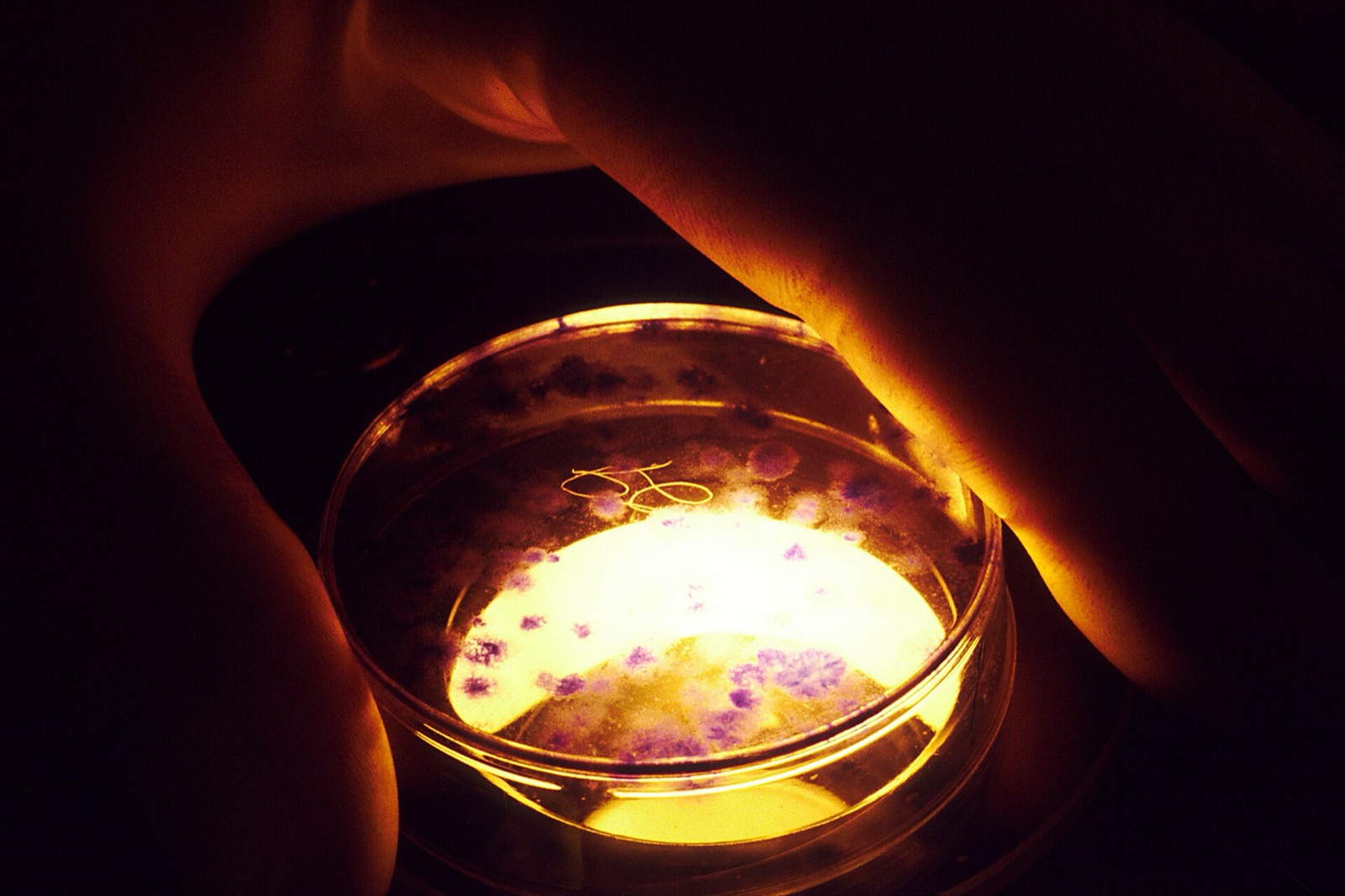
Most explanations stop at a school biology example. This one goes further, into medicine and machine learning, because the same logic catches bugs in code as well as contamination in a test tube.
Positive vs negative control: the difference in one table
- Expected result. Positive control: the effect appears. Negative control: no effect.
- Question it answers. Positive: can my method see the effect at all? Negative: is something other than my treatment causing it?
- If it fails. Positive control gives nothing: your method or reagents are broken, so a negative result in your samples means nothing. Negative control shows an effect: contamination, bias or a leak, so a positive result in your samples means nothing.
- Error it guards against. Positive: false negatives. Negative: false positives.
A simple way to remember it: the positive control protects your "no", and the negative control protects your "yes".
What is the purpose of a negative control?
A negative control sets the baseline. It goes through every step your samples go through, except the one thing you are testing. Anything it shows is background: contamination, a dirty instrument, a placebo effect, or a pipeline that leaks the answer.
Epidemiologists use the same idea in observational studies, where no lab bench exists. They pick an outcome the exposure cannot plausibly cause. If an association appears anyway, confounding or bias is at work. Lipsitch, Tchetgen Tchetgen and Cohen set out this method in a 2010 paper in Epidemiology.
10 examples of positive and negative controls
Biology and chemistry
- 1PCR. Positive: DNA known to contain the target gene. Negative: a "no-template" tube with water instead of DNA. If the water tube amplifies, your reagents are contaminated.
- 2Antibiotic test on a plate. Positive: a disc of an antibiotic the bacteria are known to be sensitive to, which must show a clear zone. Negative: a blank disc soaked only in the solvent.
- 3Enzyme test (for example starch and amylase). Positive: a sample with known active enzyme. Negative: boiled enzyme, which keeps everything the same except the activity.
- 4Western blot. Positive: a cell lysate known to express the protein. A separate loading control, such as a housekeeping protein, shows every lane got the same amount.
- 5Gram stain. Positive: a known Gram-positive species. Negative: a known Gram-negative species. Both on the same slide, so a bad stain run is caught.
Medicine and psychology
- 1Drug trial. Negative: a placebo group that gets an identical-looking pill. Positive (in some trials): an existing drug known to work, which shows the trial can detect a real effect.
- 2Observational study. Negative control outcome: an outcome the exposure cannot cause. If flu vaccination seems to "prevent" injuries, healthier people are getting vaccinated, and the main result is biased too.
Machine learning and data science
- 1Shuffled labels (negative). Train your model on the same data with labels randomly shuffled. Test accuracy should drop to chance. If it does not, test data is leaking into training. Zhang and colleagues showed in 2017 that deep networks can memorise random labels perfectly on the training set, which is exactly why you check the test set.
- 2Random or majority-class baseline (negative). A model that guesses the most common class. If your model barely beats it, the "result" may be class imbalance, not learning.
- 3Planted signal (positive). Add a synthetic feature that perfectly predicts the label, or overfit a tiny batch of 10 examples. If the model cannot learn that, your training loop is broken, and a poor real result tells you nothing.
Our own rule of thumb for student ML projects: run one positive control (overfit a tiny batch) and one negative control (shuffled labels) before every serious experiment. Together they take minutes and catch the two most common bugs we see in project reviews: a training loop that never learns, and a split that leaks.
Positive control vs control group vs experimental group
These terms get mixed up. The experimental group gets the treatment. The control group is the general comparison group, which does not get the treatment. A negative control is usually the control group. A positive control is an extra group with a known effect. Many school experiments have only a negative control. Good research has both.
Common mistakes with controls
- Running controls on a different day or batch. A control only checks the run it shares. Put it in the same plate, gel or training script.
- A negative control that differs in two ways. Water instead of the drug also removes the solvent. Use the solvent alone (a vehicle control), so the only difference is the drug.
- Ignoring a failed control. If the negative control lights up, the whole run is void. Repeat it; do not explain it away.
- No positive control in a "nothing happened" result. A null result without a positive control cannot tell "no effect" apart from "broken method".
- Forgetting controls in code. Shuffled labels and baselines are the ML version, and reviewers increasingly ask for them.
Learn to design controls properly
Our free course on designing experiments has a full lesson on positive and negative controls, plus lessons on controls and comparison and the classic lady tasting tea experiment. When you report results, an effect size says how big the difference against your control really is. At APJ-RAISE, students review each other's experiment plans before running them. Joining is free.
Questions people ask
- What is a positive control in an experiment?
- A sample known to produce the effect. It shows the method can detect the effect, so a negative result in your real samples can be trusted.
- What is a negative control example?
- A PCR tube with water instead of DNA, a placebo pill in a drug trial, or a model trained on shuffled labels. Each should show no effect.
- Why is a negative control important?
- It reveals false positives. If the negative control shows an effect, contamination or bias is present and the main result cannot be trusted.
- Can an experiment have both positive and negative controls?
- Yes, and good experiments usually do. The negative control guards against false positives and the positive control against false negatives.
Sources
- 1.Lipsitch, M., Tchetgen Tchetgen, E. and Cohen, T. (2010). Negative controls: a tool for detecting confounding and bias in observational studies. Epidemiology 21(3), 383–388.
- 2.Zhang, C., Bengio, S., Hardt, M., Recht, B. and Vinyals, O. (2017). Understanding deep learning requires rethinking generalization. ICLR 2017. arXiv:1611.03530.