Did AI solve Navier-Stokes? What OpenAI's proof shows
OpenAI says its AI proved Navier-Stokes blowup, a Millennium Prize Problem. What was proved, how the vortex works, and why mathematicians are still checking.
- Written by
- APJ-RAISE team
- Published
- Reading time
- 8 min
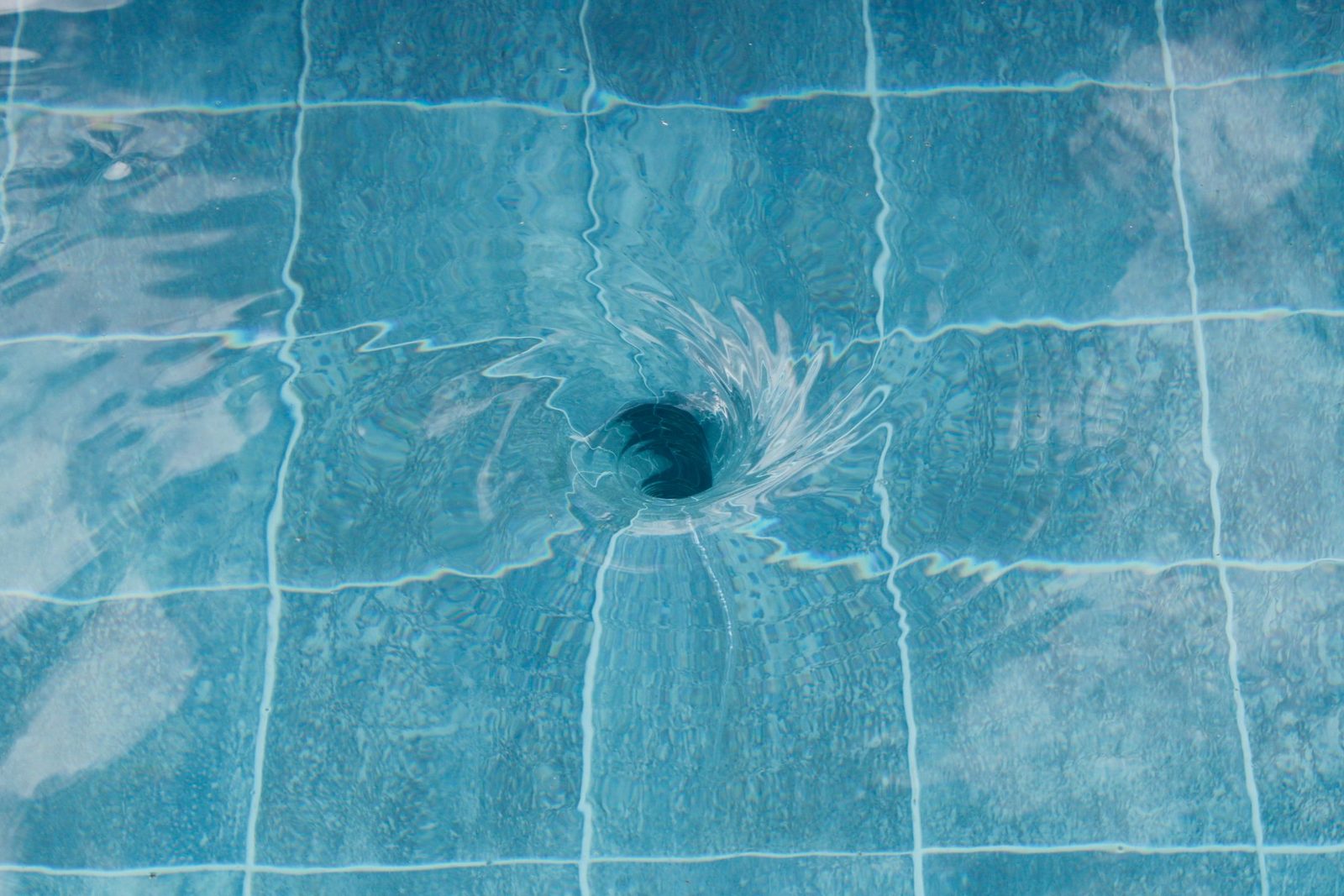
On 8 September 2026, OpenAI said an internal AI system had proved that the Navier-Stokes equations, which describe how fluids move, can break down. In its construction, a fluid starts at rest, is pushed by a smooth force, and reaches infinite speed at one point in a finite time. If the proof holds, it settles one of the seven Millennium Prize Problems, each worth $1 million.
Three days later, the Clay Mathematics Institute, which runs the prize, noted "the announcement that the Navier-Stokes problem has apparently been settled". It added that its process "is deliberately unhurried". Two months on, the computer-checked version of the proof holds up. Even so, mathematicians say they have learned little from it, a critique questions how well the two versions match, and there is a dispute over credit. This post explains what was actually proved and what is still open.
What are the Navier-Stokes equations?
The Navier-Stokes equations are Newton's second law written for a fluid. They say how the velocity of every small parcel of fluid changes, given pressure, outside forces and viscosity. Viscosity is the internal friction that resists neighbouring parcels sliding past each other. Engineers use these equations for weather, aircraft, pipes and blood flow.
The hard part is one term: a parcel's acceleration depends on the velocity itself, so the equations are nonlinear. Viscosity smooths the flow out, while the nonlinear term can concentrate it. The question has been whether, in three dimensions, smoothing always wins.
In 1934, Jean Leray showed that "weak" solutions always exist, but these may be rough. Whether a flow that starts smooth stays smooth forever was left open, and stayed open for about 90 years.
What does the Millennium Prize problem ask?
The official problem, written by Charles Fefferman for the Clay Institute, offers four statements. Proving any one of them solves the problem:
- (A) No force, all of space: every smooth starting flow stays smooth forever.
- (B) No force, a box that repeats in every direction: the same, for periodic flows.
- (C) With a force, all of space: some smooth starting flow and some smooth force lead to a breakdown, so no smooth solution exists for all time.
- (D) With a force, the periodic box: the same breakdown, for periodic flows.
This detail explains a lot of the debate. The "smooth forever" side has to work with no outside force. The "breakdown" side may choose a smooth force. OpenAI claims (C) and (D).
What exactly did OpenAI prove?
The paper, titled "Finite time blowup for Navier-Stokes", states its main result as Theorem 1.1. In plain words: for every positive viscosity, there is a force and a flow such that:
- The fluid starts completely at rest.
- The force is smooth and acts only inside a limited region of space and time.
- The velocity stays smooth up to time 1, and the total kinetic energy stays bounded.
- As time approaches 1, the highest speed in the fluid grows without limit.
So no smooth solution with bounded energy exists for all time. The paper says this establishes (C), and because everything happens in a limited region, also (D).
The manuscript is long, about 166 pages. OpenAI also released a Lean version, computer code that a proof checker can verify step by step, in a public GitHub repository. The same repository contains a second result: a finite-time blowup for the Euler equations, the frictionless version, with no outside force at all. Euler blowup is a famous open problem in its own right, though not a Millennium Prize Problem.
How does the fluid blow up?
Section 2 of the paper gives a physical picture, and it is the most readable part. Start with a trick: for any flow you like, you can define the force as "whatever is left over" when you plug the flow into the equations. The equations then hold by design. The real challenge is to choose a flow that blows up while that leftover force stays smooth.
The flow OpenAI built is a thin, spinning column of fluid at the centre:
- Inward spiral: fluid spirals toward the axis, like water going down a drain.
- Spin-up: as fluid moves inward, it spins faster, like a figure skater pulling in their arms. This is conservation of angular momentum.
- Escape route: the fluid cannot pile up at the centre, so it flows out along the axis, above and below a thin middle layer.
- Shrinking core: the column gets thinner faster than it gets shorter. Its radius shrinks like the square root of the time left.
As the core shrinks, its speeds grow without limit, yet its total energy goes to zero, because the region is tiny. The hard part is the edge of the core. Joining the fast inner flow to calm outer fluid leaves a leftover force that would itself become infinite. To cancel it, the construction adds rapidly oscillating ripples whose combined push exactly offsets the bad part. Further corrections leave a force that stays smooth right through the moment of blowup.
Blowup does not mean a real river reaches infinite speed. Real fluids are made of molecules, and the equations stop describing them at very small scales. What it shows is that the equations themselves, taken exactly, have a limit to where they stay smooth.
How did the AI find the proof?
OpenAI has not named the model. According to OpenAI's description, as reported by NPR, the system used about 10,000 AI agents working in parallel. It reached the proof 88 hours after launch and produced around 130 billion output tokens. NPR estimated, from OpenAI's public prices, that the run would cost $6 million to $10 million at those rates. That is NPR's estimate, not OpenAI's figure.
The paper builds on human work. It credits Diego Córdoba and Luis Martínez-Zoroa, who built singularities for the forced Euler equations by amplifying smaller and smaller vortex layers. It also cites earlier results by Terence Tao, Tristan Buckmaster, Vlad Vicol and others. If AI agents are new to you, our explainer on what AI agents are covers the basics.
Is the proof correct?
There are two versions to check: the Lean code and the written paper. The evidence so far:
- The Lean build passes: Brown University mathematician Javier Gómez-Serrano told NPR the Lean code "did compile as expected." An independent build record posted on Zenodo on 10 October reports no unfinished steps and no extra axioms.
- The statement matches: the same record says the Lean statements are identical to the versions in Google DeepMind's Formal Conjectures project, a public library of formally stated open problems.
- The translation is questioned: on 6 October, Alexander Bastounis, Fabian Circelli and Anders Hansen argued in a preprint that the Lean proof "does not correspond to" the written proof. Their point is about whether a Lean check gives confidence in the human-readable argument. They do not claim the blowup theorem is false.
Our view: a passing Lean proof is strong evidence for the Lean statement, which is why this result is taken seriously. Two questions remain for humans. Does the Lean statement say exactly what Fefferman's problem says? And can mathematicians follow the written proof? Lean cannot answer either.
The prize also has rules. The Clay Institute can award it only after three things happen. The solution must appear in a qualifying refereed outlet. At least two years must pass after that. And the solution must have "achieved general acceptance in the global mathematics community." So no prize decision is possible before late 2028 at the earliest.
Why are mathematicians uneasy?
Most of the concern is not about correctness. It is about understanding. Oxford mathematician James Maynard told NPR: "So far it's been very difficult to really extract any human understanding from this new AI proof." Gómez-Serrano was blunter: "The paper is not written for humans."
There is also a dispute over credit. Tristan Buckmaster of New York University said OpenAI learned of an approach he and Levent Alpöge were developing and used the same method. OpenAI denied it. OpenAI researcher Sébastien Bubeck told reporters: "We did not use their prompt or proofs to prompt our models." On 11 September, 25 Fields Medal winners signed a statement criticising "misaligned goals" between AI companies and the mathematics community, NPR reported.
What is still unsolved?
The biggest question is untouched. Statements (A) and (B) ask whether a fluid that nothing pushes stays smooth forever. OpenAI's proof uses a carefully designed force, so it says nothing about that case.
The proof also does not explain turbulence, predict weather better or improve aircraft design by itself. Buckmaster told NPR that real understanding of such solutions could give "a new toolkit to understand complicated solutions to fluids". Getting there needs humans to understand the proof first.
What students can learn from this
This episode is a preview of how research may change: AI produces long, checkable proofs, and humans work out what they mean. Some ways to engage with it:
- Read Section 2: the physical description in the paper needs only calculus and basic mechanics to follow.
- Simulate a simpler blowup: the one-dimensional Burgers equation without viscosity forms a shock in finite time. A short Python script shows the slope becoming infinite, a 1D cousin of this idea.
- Learn Lean: try small proofs, then look at how open problems are stated in Google DeepMind's Formal Conjectures project.
- Study readability: compare an AI-written proof with a human-written proof of a related result. What makes one teachable? This is an open research question.
For more on what AI can and cannot do in research, see our post on whether AI can do research and our explainer on how AI proved security properties of Signal's code. Our course on reading and reviewing papers shows how to judge a claim like this one.
Questions people ask
- Did AI solve the Navier-Stokes Millennium Prize Problem?
- OpenAI claims its AI proved the breakdown alternatives (C) and (D) of the official problem. The Lean version compiles, but the result has not yet been published in a journal or generally accepted, which the prize rules require.
- Will OpenAI get the $1 million prize?
- Not soon. The Clay Institute requires publication in a qualifying refereed outlet, at least two years of waiting and general acceptance by mathematicians. It said on 11 September 2026 that its review is deliberately unhurried.
- What does blowup mean for the Navier-Stokes equations?
- Blowup means a solution that starts smooth develops infinite speed at a point in finite time. In OpenAI's construction, a thin spinning column of fluid shrinks to a point while its speed grows without limit.
- Is the Navier-Stokes problem without a force still open?
- Yes. Whether a fluid with no outside force always stays smooth, statements (A) and (B) of the official problem, is not addressed by OpenAI's proof.
Sources
- 1.OpenAI. Finite time blowup for Navier-Stokes (paper PDF). September 2026.
- 2.OpenAI. NavierStokesAndEuler: Lean formalisations (GitHub repository).
- 3.Fefferman, C. Existence and smoothness of the Navier-Stokes equation. Official problem description, Clay Mathematics Institute.
- 4.Clay Mathematics Institute. Navier-Stokes announcement. 11 September 2026.
- 5.Clay Mathematics Institute. Rules for the Millennium Prizes.
- 6.Brumfiel, G. NPR report on the AI Navier-Stokes proof and mathematicians' reactions, 22 September 2026 (via KUOW).
- 7.Howlett, J. OpenAI claims blockbuster math breakthrough amid swirl of controversy. Scientific American, 8 September 2026.
- 8.Bastounis, A., Circelli, F. and Hansen, A. C. Navier-Stokes lost in translation. arXiv:2610.08144, 6 October 2026.
- 9.Finite-time blowup for Navier-Stokes: OpenAI's Lean proof, built and checked. Zenodo, 10 October 2026.