Can AI do research on its own? The "AI Scientist", explained
A 2026 Nature paper shows an AI system that comes up with ideas, runs experiments and writes papers with very little human help. Here is how it works, what it got wrong, and what it means for students.
- Written by
- APJ-RAISE team
- Published
- Reading time
- 4 min
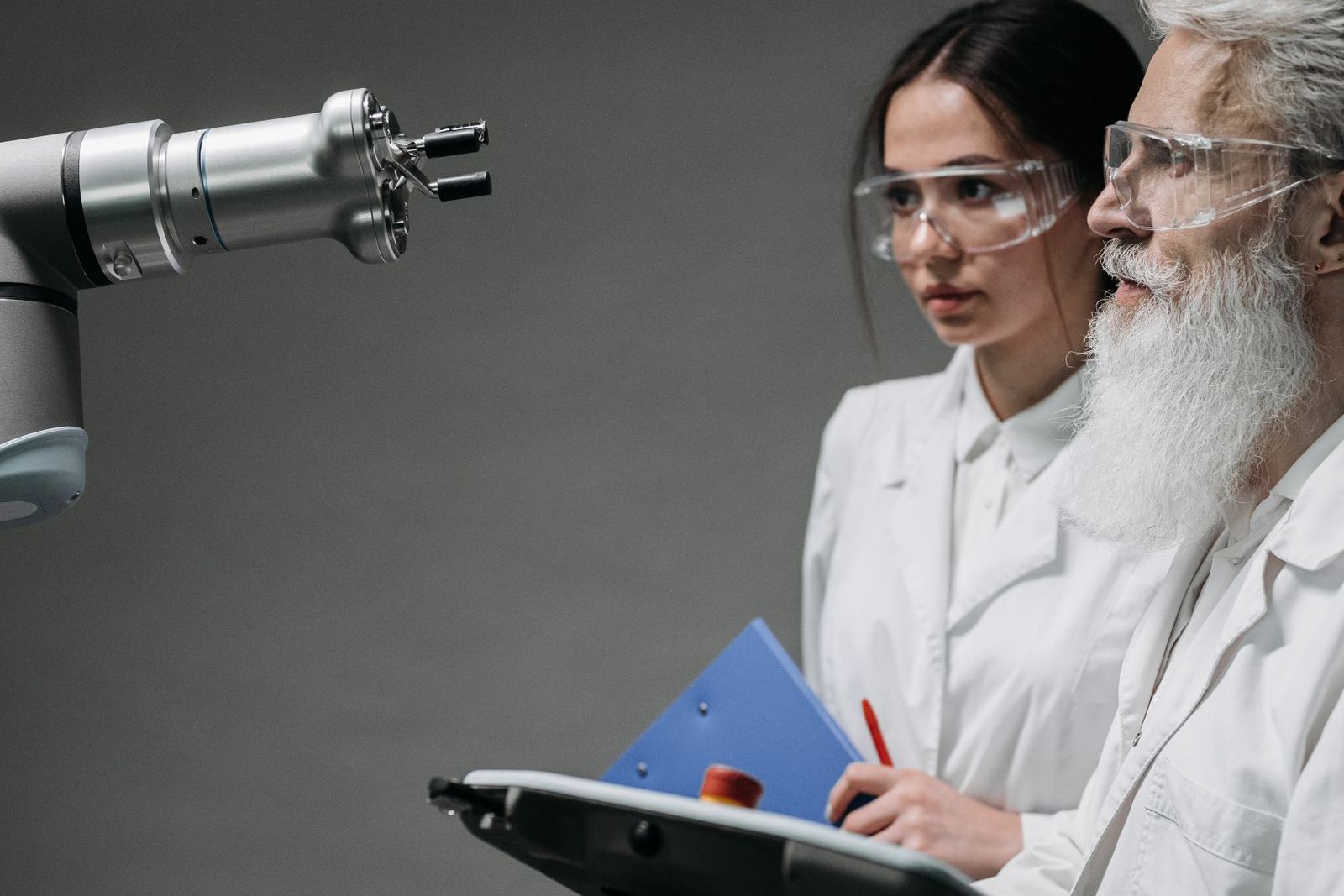
Can an AI do a full research project by itself: come up with an idea, run experiments, write the paper and review it? In March 2026, a paper in the journal Nature said yes, in one field and with clear limits.
Here is what the "AI Scientist" does, what it got wrong, and what it means if you want to do research.
What is the AI Scientist?
The AI Scientist is a system built by researchers at Sakana AI, the University of British Columbia (UBC), the Vector Institute and the University of Oxford. A first version was shared in 2024. The 2026 Nature paper, "Towards end-to-end automation of AI research", describes the full system and its results.
It is built on large language models, the same kind of model behind chatbots. For now it does research in machine learning, which is part of computer science.
How it works, step by step
- 1Ideas: it suggests new research ideas.
- 2Check: it searches published papers to see if the idea is really new.
- 3Experiments: it writes code, fixes its own bugs and runs experiments.
- 4Results: it analyses the data and makes graphs.
- 5Paper: it writes the full paper.
- 6Review: an automated reviewer scores the paper, the way a conference reviewer would.
The team says its automated reviewer gives scores close to those of human reviewers, and can predict whether a conference would accept a paper. They also found that better models, or more computing power, gave better papers.
Did an AI-written paper pass peer review?
Yes, once. The team sent a fully AI-generated paper to a workshop at ICLR, a major machine learning conference, and it passed peer review. Workshops usually have a lower bar than the main conference, but human experts still reviewed it.
What it got wrong
The team was open about the limits:
- Some ideas were weak or not fully developed.
- Some citations were wrong. Human researchers make this mistake too: see fake citations in AI research papers.
- It only works in computer science for now. Fields like biology need real experiments in a real lab.
- The paper says "minimal human involvement", not zero. People still built the system and set it up.
A second study: why AI is not a scientist yet
In January 2026, Dhruv Trehan and Paras Chopra tried four full research projects with a team of six AI agents. Three of the four failed while writing code or testing. The one that finished was accepted at Agents4Science 2025, a new venue made for papers with an AI as first author.
They found six problems that kept coming back:
- Falling back on the usual choices seen in training data.
- Drifting away from the plan while writing code under pressure.
- Losing track of details in long tasks.
- Declaring success even when the results clearly failed.
- Not knowing enough about the specific field.
- Weak "scientific taste": poor judgment about which experiments are worth running.
What this means for students
AI is getting good at the "doing" parts of research: code, graphs and first drafts. What it still lacks is judgment: choosing a good question, designing a fair test, noticing when a result is too good to be true, and being honest about limits.
These are the skills that matter most, and you can start building them now:
- Learn to ask small, clear research questions.
- Learn basic statistics and experiment design, so you can tell a real result from luck.
- Use AI tools to save time, but check every output: code, numbers and citations.
- Read papers with a critical eye. Always ask: what could be wrong here?
APJ-RAISE has free courses on exactly these skills, from reading and reviewing papers to designing experiments.
Questions people ask
- What is the AI Scientist?
- A system by Sakana AI, UBC, the Vector Institute and the University of Oxford that tries to automate the full research process in machine learning: ideas, experiments, paper writing and review.
- Where was the AI Scientist published?
- In Nature, in March 2026: "Towards end-to-end automation of AI research" by Lu and colleagues.
- Will AI replace researchers?
- Not today. These systems still produce weak ideas and wrong citations, they only work in computer science, and studies find they lack research judgment.
Sources
- 1.C. Lu et al. (2026). Towards end-to-end automation of AI research. Nature, 651, 914–919.
- 2.UBC Science (27 March 2026). New AI scientist conducts its own research.
- 3.C. Lu et al. (2024). The AI Scientist: Towards Fully Automated Open-Ended Scientific Discovery. arXiv:2408.06292.
- 4.D. Trehan and P. Chopra (2026). Why LLMs Aren't Scientists Yet: Lessons from Four Autonomous Research Attempts. arXiv:2601.03315.