IBM's quantum computer in Chicago: how Nighthawk works
IBM opened a Quantum System Two in Chicago on 6 Nov 2026. How its 120-qubit Nighthawk r2 chip works, what quantum advantage means and how students can try it.
- Written by
- APJ-RAISE team
- Published
- Reading time
- 7 min
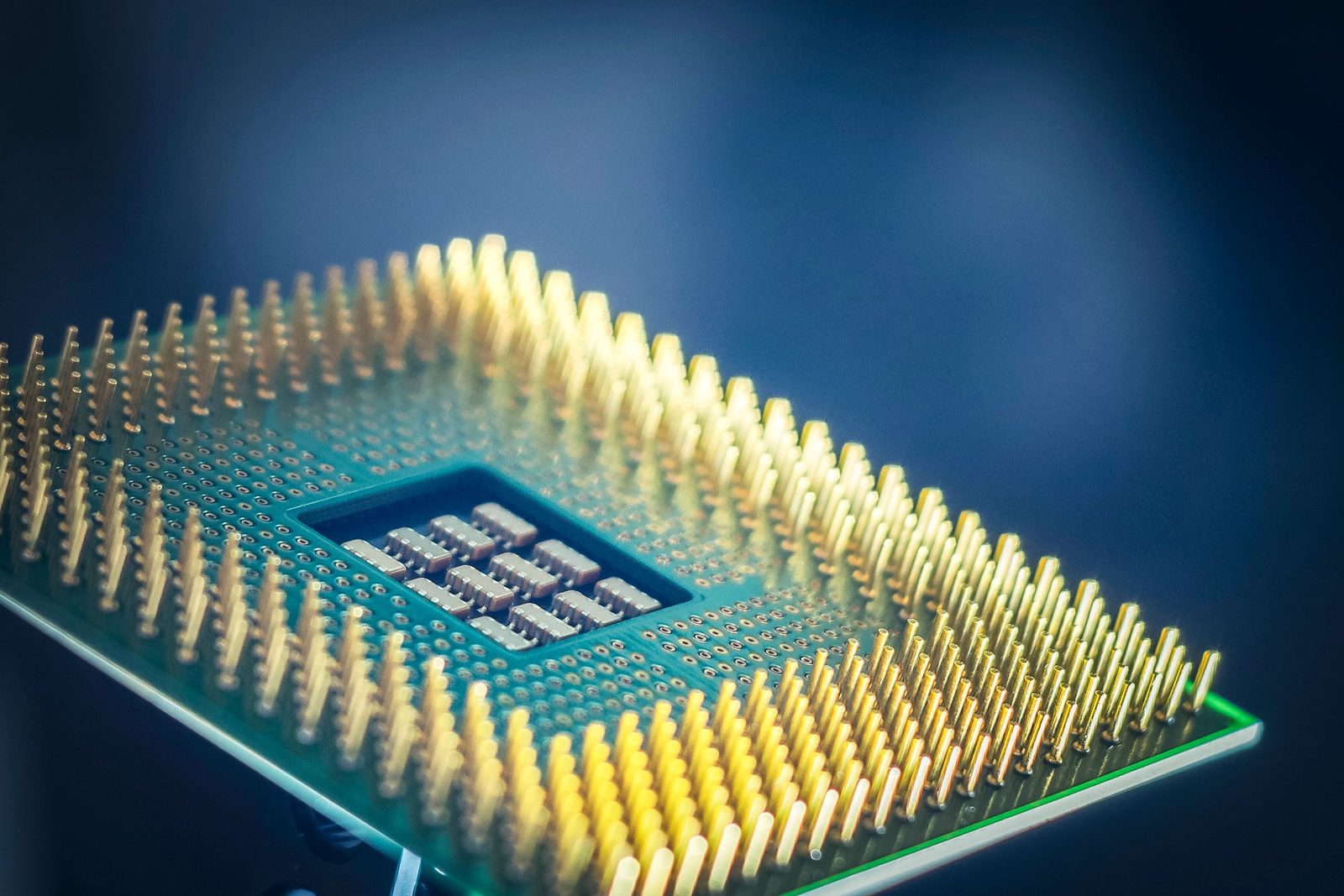
On 6 November 2026, IBM, the University of Chicago, the State of Illinois and the Illinois Quantum and Microelectronics Park opened an IBM Quantum System Two in Chicago. It sits at the university's Hyde Park Labs on 53rd Street, behind floor-to-ceiling windows. It runs on IBM's Nighthawk r2, a 120-qubit processor that IBM calls its fastest so far.
"It's probably the most publicly visible quantum computer in the world," said Harley Johnson, CEO of the quantum park. This post explains how a superconducting quantum computer works, what is new in Nighthawk r2, and what the "quantum advantage" claims around it do and do not show.
What is a quantum computer?
A quantum computer stores information in qubits instead of ordinary bits. A bit is 0 or 1. A qubit can be in a combination of both, and groups of qubits can be linked so that their states depend on each other. This is called entanglement. For some problems, this lets a quantum computer explore possibilities in ways ordinary computers cannot copy efficiently.
"Some problems" is the key phrase. Quantum computers are not faster at everyday tasks. The most promising uses are simulating molecules and materials, which follow quantum rules themselves, and certain kinds of optimisation and sampling.
IBM's qubits are tiny superconducting circuits on a chip. They only behave as qubits when extremely cold. According to IBM, its processors sit "about a hundredth of a degree above absolute zero", inside a large cooling system called a cryostat. Even then, qubits are fragile. Heat, stray signals and imperfect controls cause errors, and managing those errors is the main challenge of the field.
How does the Nighthawk r2 processor work?
Nighthawk r2 has 458 physical quantum elements in three types:
- Qubits: 120 programmable qubits that do the computing.
- Couplers: 218 tunable couplers that switch interactions between neighbouring qubits on and off.
- Reset elements: 120 of them, one for each qubit, which return it to a clean starting state.
The qubits are arranged in a square lattice, so most qubits connect to four neighbours. IBM's earlier chips connected each qubit to only two or three. More connections matter because qubits can only interact directly with neighbours. To link distant qubits, a program must pass information along a chain, and every extra step adds errors.
IBM says Nighthawk r2 keeps the gate quality of its earlier Heron chips. It describes the chip as "the most complex quantum processor IBM has ever put into production."
Why is fast qubit reset such a big deal?
Quantum programs, called circuits, are run thousands of times, because each run gives one random sample of the answer. Before every run, each qubit must be reset to 0. On older IBM chips, this was slow and error-prone:
- 1Measure each qubit.
- 2If it reads 1, flip it with a microwave pulse.
- 3Wait hundreds of microseconds so leftover energy can fade away.
This method fails when the measurement is wrong. It also cannot fix "leaked" qubits that have jumped to a higher energy state outside 0 and 1.
Nighthawk r2 replaces it with what IBM calls a dissipative reset. Each qubit is connected, through a tunable coupler, to a cold environment that drains its energy on demand. With the coupler switched on, the time a qubit takes to relax falls from about 200 microseconds to about 25 nanoseconds. The idle time between runs drops to as little as one microsecond, and neighbouring qubits are not disturbed. The reset also works in the middle of a circuit, which error-correction methods need.
The results, as reported by IBM:
- Speed: over 100,000 circuits per second, about 25 times the roughly 4,000 per second of IBM's Heron chips.
- Accuracy: about a 25 times reduction in errors when qubits are set to their starting state.
- Depth: accurate results on circuits with 7,500 gates, a target on IBM's 2026 roadmap.
- Science: a 12 times speed-up for simulations of neutron scattering, producing spectra comparable with lab data in about 60 seconds.
The 7,500-gate result used error mitigation, specifically a method called probabilistic error amplification. In simple terms, the circuit is run with its noise deliberately increased by known amounts. The results are then extrapolated back to estimate what a noise-free machine would give. This is different from full error correction, which IBM and others are still working toward.
Has IBM shown quantum advantage?
Quantum advantage means a quantum computer doing a task better than any known classical method. In July 2026, IBM highlighted three papers that claim advantage. Its partners on them were the University of Chicago, Qedma and Algorithmiq. The Chicago team's paper is easiest to explain.
It uses "doped Clifford" circuits. Clifford circuits are a type of quantum circuit that ordinary computers can simulate easily. Adding a different kind of operation, called a T gate, makes them very hard to simulate. The team ran a Clifford circuit doped with T gates. Because the plain Clifford version can be checked on a laptop, it gives a trusted reference for how well the hardware performed.
The numbers from the paper's abstract:
- Circuit: 64 qubits, 73 layers deep, with 314 T gates added.
- Hardware: 76 physical qubits, using a code that spreads error-checking qubits across both space and time.
- Errors: the effective gate error fell about ten times after discarding runs that showed detected errors.
- Quality: a guaranteed lower bound on fidelity of 0.349, with 95% confidence.
Our view: treat this as a strong claim, not a settled one. The certificate depends on assumptions about the device's noise, as the paper states. Classical simulation methods keep improving, and earlier advantage claims by several companies were later matched by clever classical algorithms. IBM itself says announcing advantage "does not close the case" and invites closer checking. The sources also do not say that these experiments ran on the new Chicago machine.
Why build a quantum computer in Chicago?
The system is part of a larger plan. The State of Illinois is investing $500 million in the Illinois Quantum and Microelectronics Park, a campus being built on the site of a former U.S. Steel plant on Chicago's Southeast Side. The machine will run at the University of Chicago first and later move to that campus.
Its long-term home is the National Quantum Algorithm Center, a state-backed effort to develop quantum algorithms and applications, with IBM as an anchor partner. Its first five Grand Challenge awards, announced in April 2026, each pair a university group, a quantum company and an end user. IBM is a partner on two. One works on drug discovery with Deloitte, AbbVie and Northwestern University, and one on power-grid optimisation with EPRI and the University of Illinois.
Separately, the University of Illinois' supercomputing centre NCSA has connected its DeltaAI supercomputer to an IBM quantum system. Its first demonstration studied a metal with an unusual atomic lattice. The results are due at the SC26 supercomputing conference this month.
For students, access matters most. "For our graduate students, having access to a quantum computer is incredible," said Nadya Mason, the university's vice president for research.
How can students use a real quantum computer?
You do not need to be in Chicago. IBM says Nighthawk r2 is available on the IBM Quantum Platform, where new users can sign up for a free account. Check the current plan to see which processors and how much time free accounts get. Programs are written in Qiskit, IBM's open-source Python library. Some first projects:
- Entanglement: build a two-qubit Bell state, run it on a simulator and on real hardware, and compare the results. The difference is the noise.
- Error mitigation: run the same small circuit with extra gates that cancel out, to raise the noise on purpose, and see how the answer drifts.
- Clifford simulation: write a circuit of only Clifford gates, simulate it classically, then add T gates one by one and measure how the simulation time grows.
- Chemistry: compute the energy of a small molecule such as hydrogen with a variational algorithm, and compare it with the known value.
Projects like these need careful statistics, because every quantum result is an average over noisy samples. Our course on designing experiments covers how to plan repeated measurements. For more science explainers, see our posts on the 2026 Nobel Prize in Physics and the 2026 Nobel Prize in Chemistry.
Questions people ask
- Where is IBM's quantum computer in Chicago?
- The IBM Quantum System Two is at the University of Chicago's Hyde Park Labs on 53rd Street. It will later move to the Illinois Quantum and Microelectronics Park on Chicago's Southeast Side.
- How many qubits does IBM Nighthawk r2 have?
- Nighthawk r2 has 120 programmable qubits, supported by 218 tunable couplers and 120 reset elements, for 458 physical quantum elements in total. Most qubits connect to four neighbours in a square lattice.
- Why is Nighthawk r2 faster than Heron?
- Its dissipative reset returns qubits to their starting state in nanoseconds instead of waiting hundreds of microseconds. That lets it run over 100,000 circuits per second, about 25 times Heron's rate.
- Can I use an IBM quantum computer for free?
- New users can sign up for a free account on the IBM Quantum Platform, which offers access to real IBM processors. Free time is limited, so check the current plan. Programs are written with Qiskit, IBM's open-source Python library.
Sources
- 1.Letzter, R. Chicago's bid to lead the country in quantum computing. IBM Quantum blog, 6 November 2026.
- 2.Haas, H., McKay, D. and Davis, R. IBM Quantum Nighthawk r2: more circuits, faster. IBM Quantum blog, 31 August 2026.
- 3.Kandala, A., Javadi-Abhari, A. and Gambetta, J. Researchers demonstrate quantum advantage through trusted quantum computation. IBM Quantum blog, 30 July 2026.
- 4.Martiel, S., et al. Sampling hard circuits with verifiably high fidelity. arXiv:2607.25941, 2026.
- 5.IBM Quantum. Technology overview.