ICML 2027 deadline: dates, two-stage review and a plan
APJ-RAISE team · · 9 min read
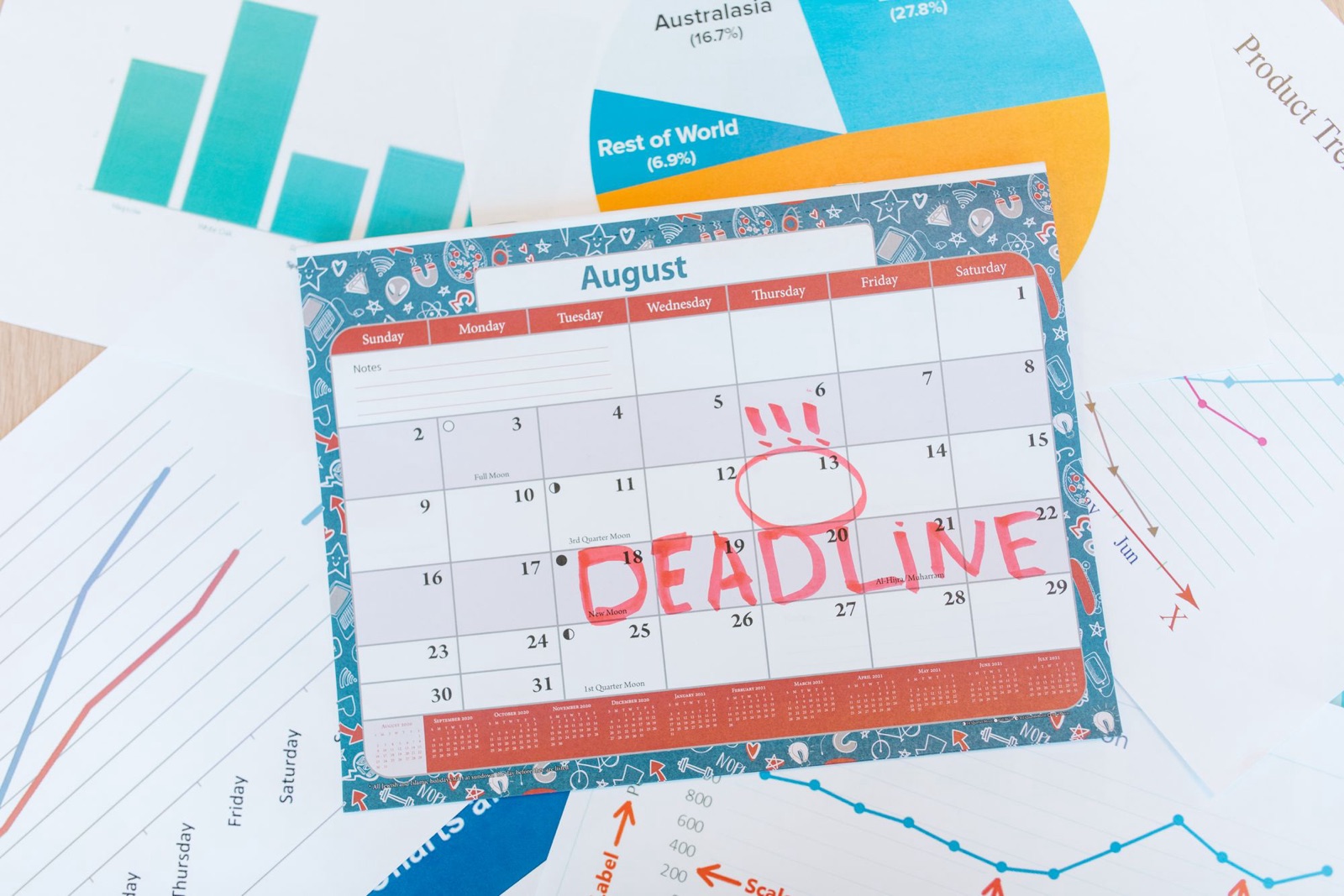
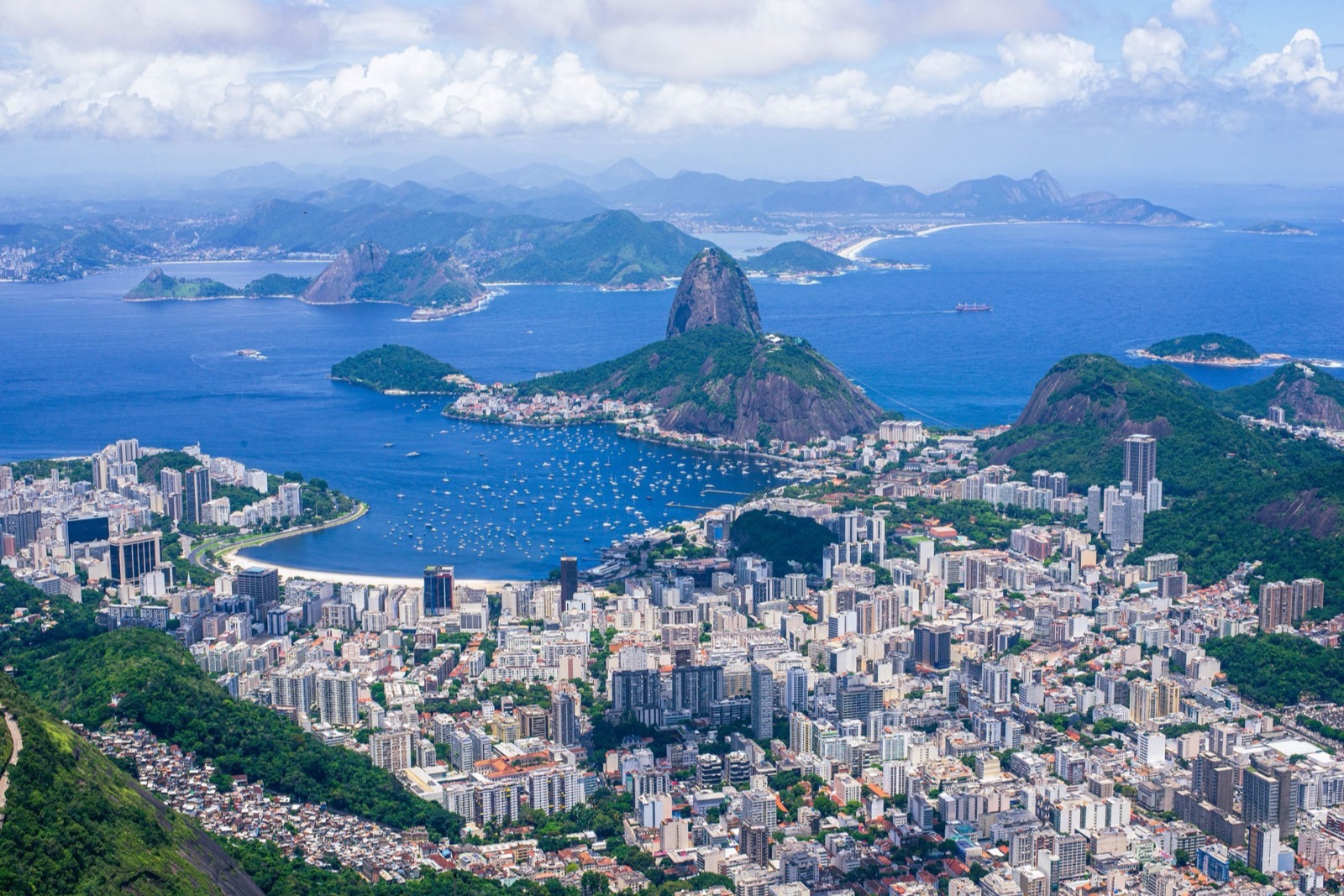
The ICML 2027 full paper deadline is 22 January 2027 at 11:59 PM Anywhere on Earth (AoE), which is 5:29 PM IST on 23 January. The abstract must be registered a week before that, by 14 January 2027 AoE. ICML 2027, the 44th International Conference on Machine Learning, takes place at Riocentro in Rio de Janeiro, Brazil, from 31 July to 6 August 2027.
This post tries to answer one question for a student who has never submitted before: can you make the 14 January deadline, and what does the new two-stage review change for you? The short answer is yes if your experiments are mostly done today, and the two-stage review means a weak draft can now be out in a month instead of three.
Every fact was checked on icml.cc on 18 November 2026. ICML has said it will post updates to the submission process (not the paper format) by late November, so look again before you submit.
ICML 2027 important dates
- Submission site opens: 8 January 2027, on OpenReview
- OpenReview account: suggested by 8 January 2027
- Abstract: 14 January 2027, 11:59 PM AoE (5:29 PM IST, 15 January)
- Full paper: 22 January 2027, 11:59 PM AoE (5:29 PM IST, 23 January)
- First-stage rejections sent: by 23 February 2027
- Full reviewing: 24 February to 16 March 2027
- Final decisions: 3 May 2027
Supplementary material has no separate date. It goes in with the paper on 22 January. The author response dates are not out yet, and ICML says it will not extend any deadline.
AoE is UTC minus 12 hours. India runs 17 hours 30 minutes ahead of it, which is why an AoE deadline lands in the late afternoon of the next day in IST. Do not plan around that extra afternoon. OpenReview slows down near any big deadline, so treat the evening of 22 January in India as your real cut-off.
How many days are left until the ICML 2027 deadline?
We counted from today, 18 November 2026. There are 57 days to the abstract deadline and 65 days to the full paper. That sounds like two months. In practice it is less, for three reasons you can check on your own calendar.
- Holidays: Christmas and New Year fall inside the window. Supervisors and co-authors often go quiet for a week or more.
- Late start: the submission form only opens on 8 January, six days before the abstract is due.
- Hidden tasks: the AI Disclosure Statement, the impact statement, code anonymisation and profile checks each take a day or so.
Take ten days out of the 65 for the break and four for admin. That leaves you about 51 working days for science and writing. If your main result does not exist yet, 51 days is tight for a full ICML paper. If it does, there is time to make it solid.
What does the ICML 2027 two-stage review change?
ICML 2027 reviews papers in two steps. First, an area chair looks at each paper and decides whether it goes to full review. A senior area chair has to confirm every early rejection, and the authors receive a short reason by 23 February. Papers that pass then get full reviews between 24 February and 16 March, and final decisions arrive on 3 May.
For a first-time author, this changes the risk in a simple way. Under a one-stage system, a rough paper still collects a few detailed reviews, and that feedback has value. Under two stages, a paper with an unclear claim or missing baselines may be stopped early, with only a brief note. You save three months of waiting, but you learn less.
So the first page matters more than before. The abstract, the first figure and the contribution list must make the claim clear to an area chair who reads quickly. You also pick a contribution type for the paper: General, Theory, Application-driven, Concept and Feasibility, Negative Results, or Datasets, Evaluations and Benchmarks. Choose the one that matches what you actually show, because it steers who reads your work.
ICML vs ACL vs CVPR: how the review process compares
Students in India often aim at all three of these venues in the same season. The review flows are quite different, which affects how you plan.
- ICML 2027: one OpenReview submission, an early filter by the area chair, then full reviews. Decisions on 3 May.
- ACL 2027: you submit to ACL Rolling Review by 4 January, get reviews there, and then commit the reviewed paper to ACL. See our ACL 2027 and ARR guide.
- CVPR 2027: the deadline has passed. Reviews come on 25 January, you get a one-page rebuttal, and decisions follow on 25 February. See CVPR 2027 after submission.
The practical point: ICML is the only one of the three where your paper can be rejected before any full review. ACL gives you reviews you can carry to a later venue. CVPR gives you one page to answer and no new experiments.
Can a first-time author submit to ICML 2027?
Yes, but the quota rule limits how many first-time papers you can be on. A paper whose authors have no accepted paper at a listed venue by 14 January 2027 has no eligible reciprocal reviewer. Each author may appear on only one such paper.
The listed venues include ICML, NeurIPS, ICLR, AISTATS, JMLR, TMLR, ACL, EMNLP, CVPR, ICCV, AAAI, IJCAI, KDD and COLT, among others. Workshop and short papers do not count. ICML checks OpenReview profiles, so complete yours and add a DBLP link.
In most student papers, the supervisor fills the reciprocal reviewer slot. That comes with a duty: the supervisor must finish their reviews between 24 February and 16 March 2027, or your paper can be desk rejected. Confirm this with them in November, not in January.
Other quota rules apply to everyone. No author can be on more than 20 submissions. Authors with several papers must rank them by their own view of quality.
ICML 2027 page limit, template and anonymity
The main paper can run to 8 pages. A main body longer than that is rejected automatically. References, the impact statement and appendices can take as many pages as you need, in the same PDF, which may be up to 50 MB. Accepted papers get one more page, so 9 in the camera-ready.
ICML accepts LaTeX only. Download the official style files and the example paper, and never reuse an old year's template.
Review is double-blind. Remove names, acknowledgements, grant numbers and links to public code. Anonymous code can go in a zip file or in an anonymous GitHub repository on a branch you leave untouched after the deadline. You may post on arXiv, but you must not advertise the work as an ICML submission while it is under review. Sending the same or a very similar paper to another conference or journal at the same time is not allowed, although workshops without proceedings are fine.
The title, the full author list and a real abstract must be in by 14 January. After that date, authors cannot be added or removed.
Can you use ChatGPT to write an ICML 2027 paper?
You can use generative AI, but you must disclose any substantive use in an AI Disclosure Statement, which does not count toward the page limit. Substantive use covers research ideas, proofs, experiment design, code, data analysis, literature review and drafting large parts of the text. Grammar, spelling and LaTeX help need no disclosure.
You remain responsible for every line, including any made-up reference a chatbot slipped in. Our post on fake citations in AI research papers shows how to catch them. Reviewers, for their part, may use privacy-compliant LLMs to understand a paper or polish their wording, but not to judge it or write the review.
A 57-day work plan to the ICML 2027 abstract deadline
We built this plan from today's date and the official deadlines. It front-loads experiments and leaves the holiday week for writing you can do alone.
- 118 to 24 Nov: Read the call for papers. Check the quota rule for every co-author and confirm who is the reciprocal reviewer. Decide honestly whether the main result is ready.
- 225 Nov to 1 Dec: Update OpenReview profiles with college email and DBLP. Download icml2027.zip. Look for ICML's late-November update.
- 32 to 15 Dec: Finish the main experiments and run fair baselines with matched settings. Add ablations, where you remove one part at a time.
- 416 to 22 Dec: Write a full draft within 8 pages and send it to your supervisor before the break.
- 523 Dec to 1 Jan: Write the impact statement, the AI Disclosure Statement and the related work. These need no meetings.
- 62 to 7 Jan: Fix what your supervisor flagged. Clean and anonymise the code. Move extra results to the appendix.
- 78 to 14 Jan: The form opens on 8 January. Enter the title, all authors, the real abstract, the contribution type and the reciprocal reviewer by 14 January.
- 815 to 22 Jan: Check page count, anonymity and every reference. Upload PDF and code by the evening of 22 January IST.
If the result is not there by mid-December, a rushed paper is likely to fall in the first stage. A workshop is often the better first target, and our NeurIPS 2026 guide explains how workshops work. Watch out for lookalike events with similar names, as our post on predatory conferences shows. To compare ICML with ACL, IJCAI and COLT, see our AI conference deadlines 2027 guide.
Where is ICML 2027, and do you have to travel?
ICML 2027 is held in person at Riocentro, a convention centre in Rio de Janeiro. The schedule is Expo Day on Saturday 31 July, tutorials on Sunday 1 August, the main conference from Monday 2 to Wednesday 4 August, and workshops on 5 and 6 August. Rio is 8 hours 30 minutes behind IST.
You do not have to travel to publish. After acceptance, authors can present in person or choose proceedings only. Both are treated the same in the proceedings and can win awards. A proceedings-only paper still needs at least one author with virtual registration.
For Indian students who do want to go, ICML's visa page says Brazil guidance will be posted there, that rules depend on nationality, passport type and length of stay, and that you should check with the Brazilian consulate before booking. An invitation letter can be downloaded after registering. We could not open the Embassy of Brazil in New Delhi's visa page on 18 November 2026, so we do not state the rules. Financial aid and volunteer applications are not open yet; dates will appear on the financial aid page.
The position paper track and the workshops both exist, but as of 18 November 2026 both calls say they will be posted soon. Position papers use a separate OpenReview site.
When reviews arrive, our ICLR 2027 rebuttal guide has a reply method you can reuse. Note one difference: ICML's author instructions say no revised PDF is allowed during the author response. For the paper itself, take the free course on writing a research paper. At APJ-RAISE, students read drafts for each other before deadlines like this one. Joining is free.
Questions people ask
- What is the ICML 2027 submission deadline?
- The full paper deadline is 22 January 2027, 11:59 PM AoE, which is 5:29 PM IST on 23 January. The abstract deadline is 14 January 2027, 11:59 PM AoE.
- What is the ICML 2027 location?
- Riocentro in Rio de Janeiro, Brazil, from 31 July to 6 August 2027. The main conference is 2 to 4 August and workshops are on 5 and 6 August.
- Is the ICML 2027 call for papers out?
- Yes. It was first posted on 13 November 2026 and clarified on 17 November. ICML plans updates to the submission process by late November 2026, so check it again.
Sources
- 1.ICML 2027 conference home page.
- 2.ICML 2027 Dates.
- 3.ICML 2027 Call For Papers (initial version 13 November 2026, clarification 17 November 2026).
- 4.ICML 2027 Author Instructions.
- 5.ICML 2027. Submission quotas and reciprocal reviewing.
- 6.ICML 2027. Policy on the Use of Generative AI for Research and Writing Papers for Authors.
- 7.ICML 2027. LLM policy for reviewing.
- 8.ICML 2027 Visa Information.
- 9.ICML 2027 Volunteer and Financial Aid.
- 10.ICML 2027 submission site on OpenReview.